India's income tax filing system has evolved significantly over the last decade. Today, most taxpayers can file their Income Tax Returns (ITR) online through the Income Tax Department's e-Filing portal without visiting a tax office. As digital transactions continue to grow, protecting financial information and ensuring the authenticity of submitted documents has become increasingly important.
One of the most trusted methods of securing electronic tax documents is the Digital Signature Certificate (DSC). A DSC provides strong identity verification, protects submitted data from tampering, and gives electronic documents legal recognition under the Information Technology Act, 2000.
This guide explains how Digital Signature Certificates improve the security of tax filing, who needs one, how Public Key Infrastructure (PKI) works, and the best practices for protecting your digital identity while filing income tax returns online.
Why Secure Income Tax E-Filing Matters
Income tax returns contain highly sensitive personal and financial information, including:
- PAN details
- Aadhaar information (where applicable)
- Bank account details
- Salary and business income
- Capital gains
- Tax deductions
- Refund information
- Investment details
Any unauthorized modification or misuse of this information can lead to financial losses, identity theft, compliance issues, or delayed processing. Secure authentication mechanisms help ensure that only the authorized taxpayer or representative submits the return.
What is a Digital Signature Certificate (DSC)?
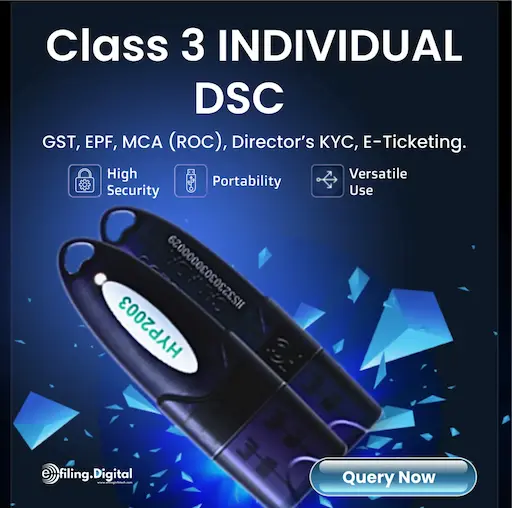
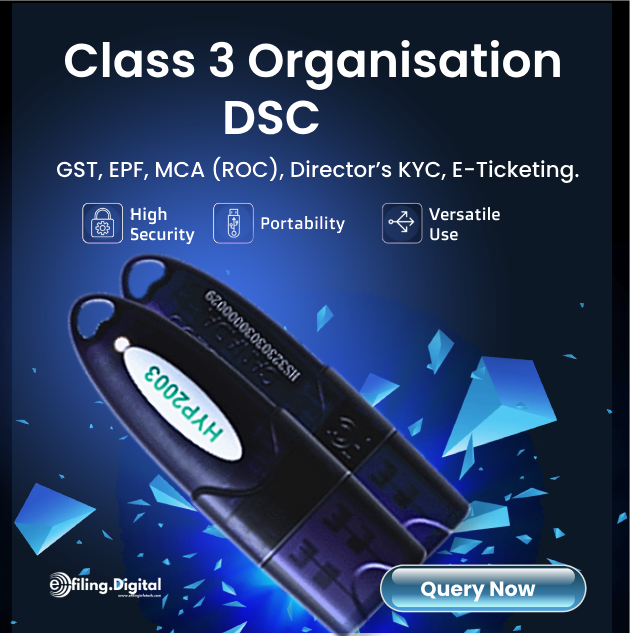
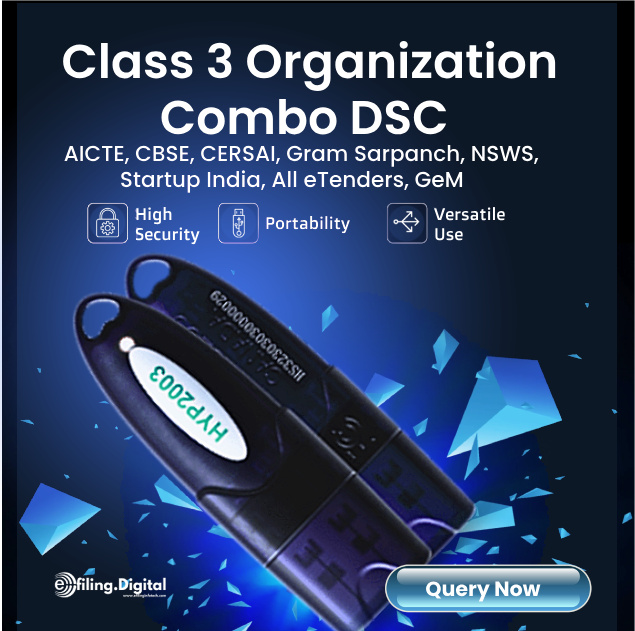
A Digital Signature Certificate (DSC) is a secure electronic credential issued by a licensed Certifying Authority (CA) under the supervision of the Controller of Certifying Authorities (CCA), Government of India. It verifies the identity of the signer and confirms that an electronic document has not been altered after signing.
Unlike a scanned handwritten signature, a DSC uses cryptographic technology to create a unique digital signature for every document, making forgery extremely difficult.
Every digitally signed document contains cryptographic information that helps verify the identity of the signer and detect any post-signature modifications.
How Public Key Infrastructure (PKI) Protects Tax Returns
Digital Signature Certificates operate using Public Key Infrastructure (PKI), an internationally accepted framework for secure digital communication.
PKI works using two mathematically related cryptographic keys:
- Private Key – securely stored with the certificate owner and used for signing.
- Public Key – used by recipients or systems to verify the authenticity of the signature.
When an income tax return is digitally signed:
- The document is converted into a unique cryptographic hash.
- The hash is encrypted using the signer's private key.
- The signed document is submitted to the Income Tax Department.
- The receiving system verifies the signature using the corresponding public key.
- If even one character of the document changes after signing, verification fails.
This process helps ensure:
- Identity verification
- Data integrity
- Authentication
- Non-repudiation
- Tamper detection
Benefits of Using DSC for Income Tax Filing
Enhanced Security
Protects sensitive tax information using strong encryption and digital authentication.
Legal Recognition
Digital signatures are legally recognized under the Information Technology Act, 2000.
Data Integrity
Ensures the submitted return remains unchanged after signing.
Identity Verification
Confirms that the return has been filed by the authorized taxpayer or representative.
Reduced Fraud Risk
Helps prevent unauthorized submissions and document manipulation.
Paperless Process
Supports secure electronic submission without physical paperwork where applicable.
Who Should Use a Digital Signature Certificate?
Depending on applicable Income Tax Department requirements and filing scenarios, DSCs may be used by:
- Companies
- Limited Liability Partnerships (LLPs)
- Partnership firms
- Chartered Accountants
- Tax Consultants
- GST Practitioners
- Business owners
- Individuals who prefer stronger document authentication
The exact filing requirements may vary based on the taxpayer category and applicable Income-tax Rules. Always verify the latest eligibility and filing instructions on the Income Tax e-Filing portal.
Digital Signature vs Aadhaar OTP Verification
| Feature | Digital Signature Certificate | Aadhaar OTP |
|---|---|---|
| Identity Verification | Strong cryptographic authentication | OTP based verification |
| Document Integrity | Yes | No |
| Tamper Detection | Yes | No |
| Suitable for Professional Signing | Yes | Limited |
| Legally Recognized Digital Signature | Yes | Authentication only |
Best Practices for Safe Income Tax E-Filing
- Purchase Digital Signature Certificates only from licensed Certifying Authorities or their authorized partners.
- Keep your DSC USB token or signing device in a secure location.
- Never share your private key or token password.
- Use updated browsers and operating systems.
- Verify the official website URL before logging in.
- Enable multi-factor authentication wherever available.
- Keep antivirus and security software updated.
- Download acknowledgement receipts after successful filing.
- Review all financial information before final submission.
- Renew your Digital Signature Certificate before expiry.
Common Mistakes to Avoid
- Using an expired Digital Signature Certificate.
- Registering an incorrect DSC on the Income Tax portal.
- Sharing DSC credentials with unauthorized persons.
- Ignoring certificate renewal reminders.
- Signing incorrect or incomplete tax documents.
- Downloading DSC software from unofficial sources.
Frequently Asked Questions
Is a Digital Signature Certificate legally valid?
Yes. Digital Signatures issued under the Information Technology Act, 2000 by licensed Certifying Authorities are legally recognized in India.
Can a DSC prevent document tampering?
Yes. Any modification made after digital signing invalidates the signature during verification.
Is a DSC more secure than uploading a scanned signature?
Yes. A scanned signature is simply an image, while a DSC uses cryptographic technology to verify identity and document integrity.
Can professionals use one DSC for multiple government portals?
Subject to portal-specific registration requirements, a valid Digital Signature Certificate may be used across multiple supported government and regulatory portals.
Final Thoughts
Digital tax filing has made compliance faster and more convenient, but security remains equally important. A Digital Signature Certificate adds an extra layer of trust by verifying the identity of the signer, protecting document integrity, and supporting legally recognized electronic signatures.
Whether you are an individual taxpayer, business owner, Chartered Accountant, or tax consultant, following secure filing practices and using a valid Digital Signature Certificate can help safeguard your sensitive financial information while simplifying online compliance.
Need a Digital Signature Certificate?
Looking for a reliable Digital Signature Certificate for Income Tax filing, GST, MCA, ICEGATE, DGFT, eTendering, or other government portals? Choose a trusted provider that offers genuine certificates from licensed Certifying Authorities, expert assistance, and timely renewal support.
Explore our Digital Signature Certificate solutions or contact our team for guidance in selecting the right DSC for your filing requirements.
Useful Resources
- Income Tax Department e-Filing Portal
- Controller of Certifying Authorities (CCA), Government of India
- Information Technology Act, 2000
- Digital Signature Certificate Registration Guides